A market square shaped by fire and rebuilding
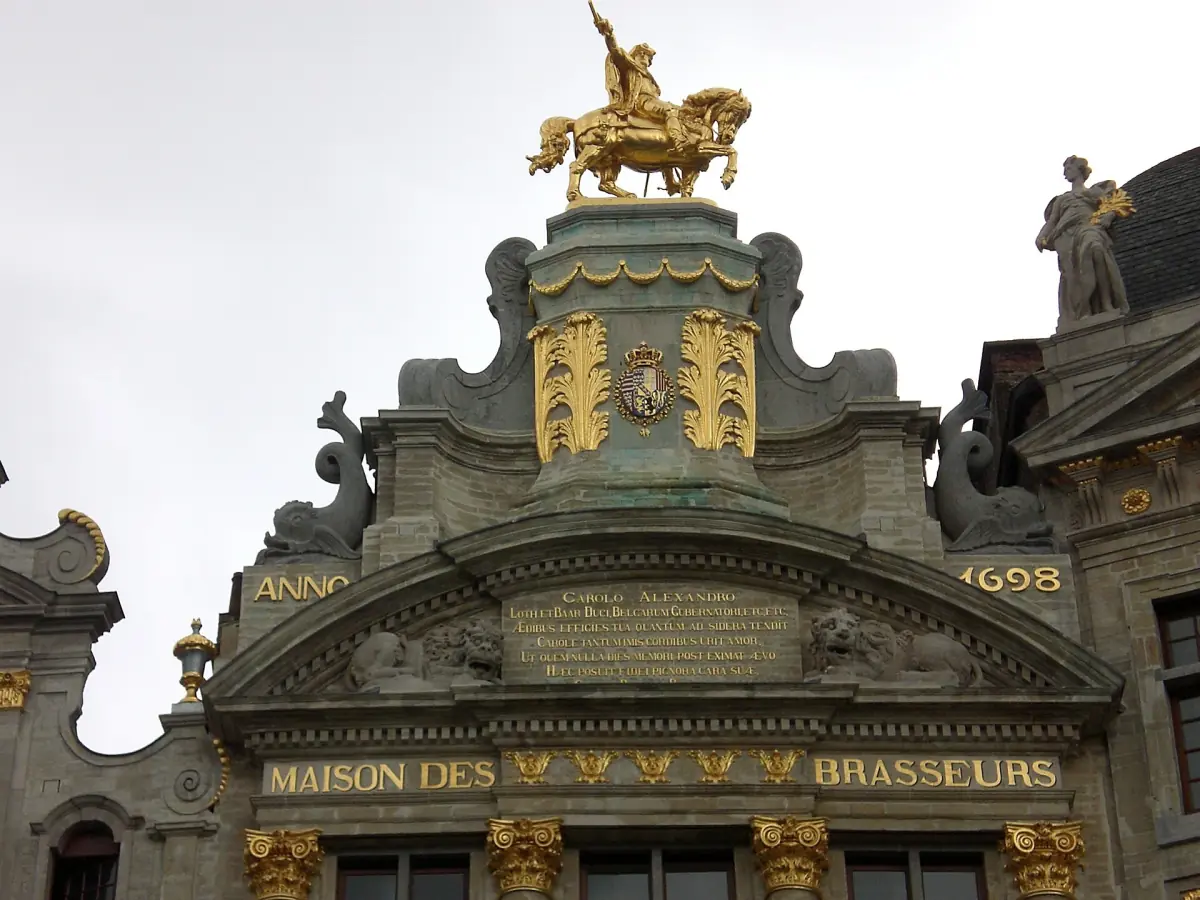
The oldest references to the Grand Place go back to the 12th century, when the area served as the lower market of the town. What you see today is mostly the work of the end of the 17th century. In August 1695 French troops under Marshal de Villeroy bombarded Brussels and destroyed large parts of the square. The Town Hall facade and tower and a few stone walls stood, and the guilds rebuilt their houses in stone within a short time.
That is why the square is not a medieval ensemble in the strict sense. The Gothic Town Hall comes from the 15th century, while the gilded guild houses date from the rebuilding after 1695. If you want to see the buildings up close, the old town page shows how to walk around them.
Our pick: a history walk
For the city's history, this 2.5-hour walk tells Brussels legends, with traditional sweets.
Hand-picked tours, booked through Viator. Prices are indicative starting prices in euros (as of October 2026). Tap a tour for live availability and the current price in your currency.
Tours on the Grand Place
Walking tours of the old town with live prices and availability.
Key dates at a glance
Dates are those of the building history and the World Heritage inscription.
| Date | Event |
|---|---|
| 12th century | Earliest references to the square and the lower market |
| 1402–1420 | Jacques van Thienen builds the first part of the Town Hall |
| From 1444 | Extension of the Town Hall |
| 1449–1455 | Jean van Ruysbroeck builds the tower |
| 1455 | The tower receives the statue of Saint Michael |
| August 1695 | French bombardment and the rebuilding of the houses in stone |
| From 1840 | Restoration campaigns in the historicist style |
| 1852 | Victor Hugo stays at Le Pigeon, Grand-Place 26/27 |
| 1998 | UNESCO World Heritage inscription |
For most readers, 1695 is the date that explains the square: it is the reason most houses share the same period of building.
The Town Hall and the King's House
Two buildings with very different stories.
The Town Hall
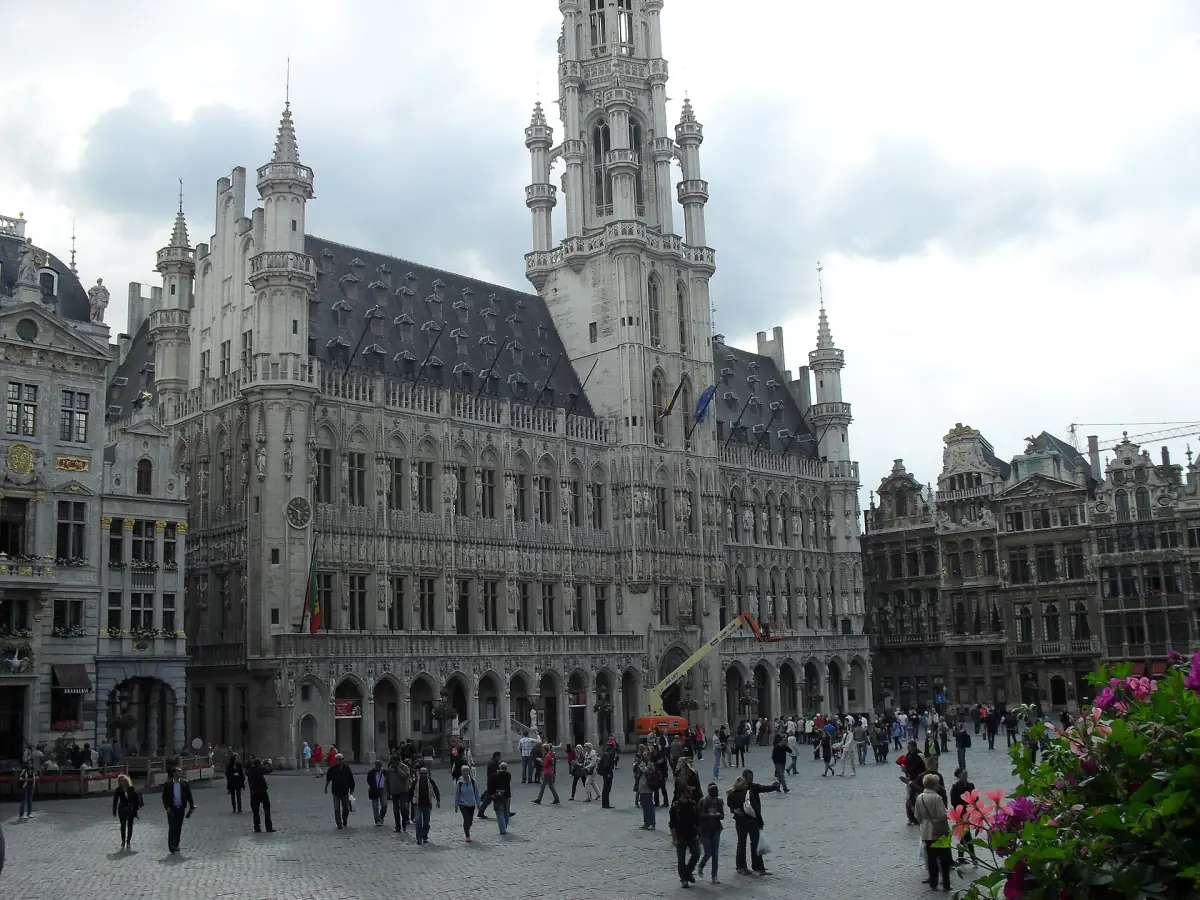
The building grew in phases rather than from a single year. Jacques van Thienen built the first part between 1402 and 1420, an extension followed from 1444, and Jean van Ruysbroeck raised the tower between 1449 and 1455. The tower is 96 m high and carries the statue of Saint Michael, the patron saint of the city, from 1455. The facade and the tower survived the bombardment of 1695. Details on visits are on the Town Hall page.
The Maison du Roi
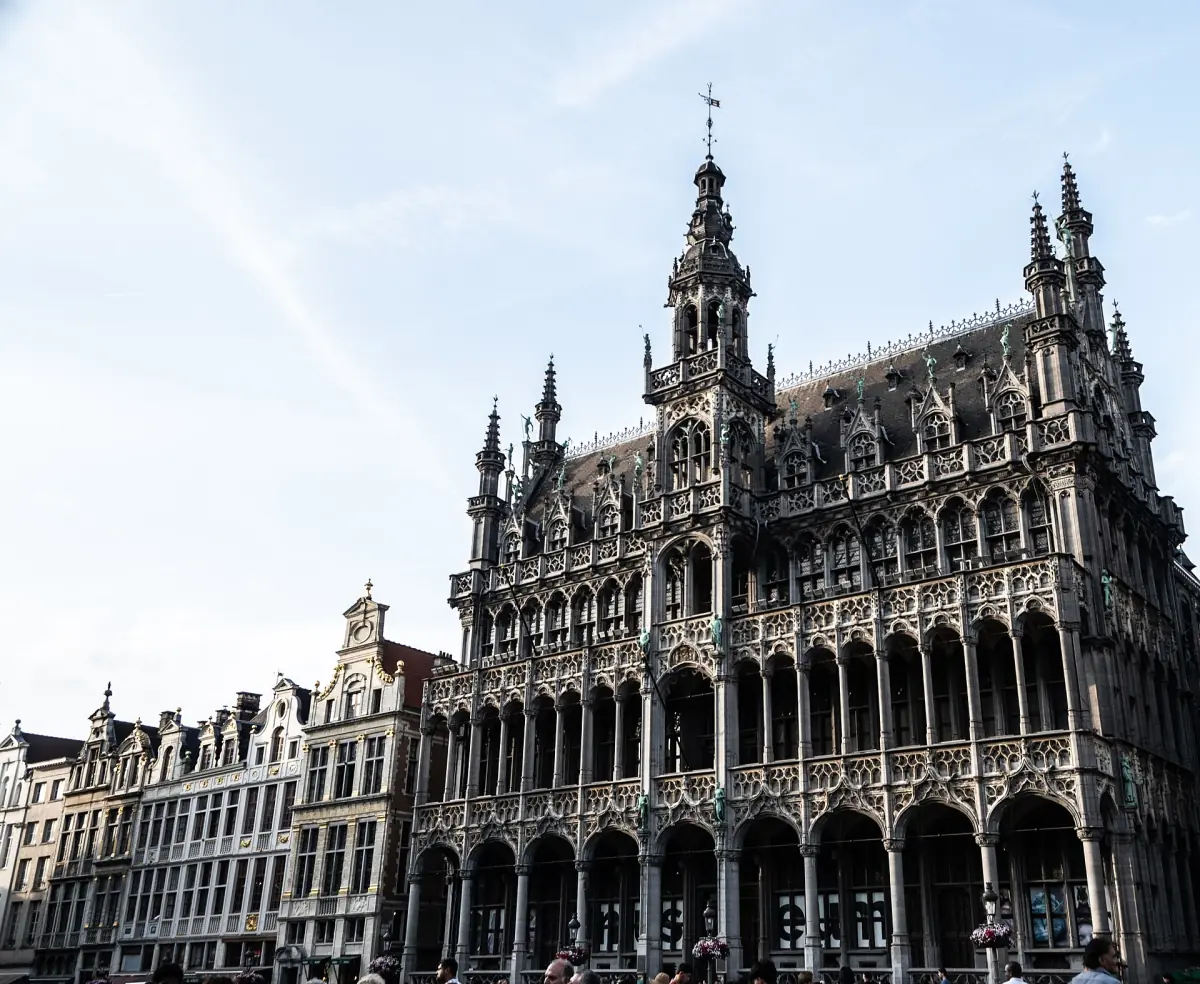
The King's House stands on the site of the former bread hall. The building you see is a historicist rebuild, made during the restoration campaigns that began in 1840, after the earlier house was demolished. The name alone does not show that a king lived there. It now houses the Brussels City Museum.
The restoration campaigns
From 1840 onwards, campaigns renewed the Town Hall statues and interiors and rebuilt the Maison du Roi. The neo-Gothic details you see are therefore not unchanged medieval originals. This is part of the story of the square, and UNESCO's description of the site says as much.
The guild houses
Names and a few residents.
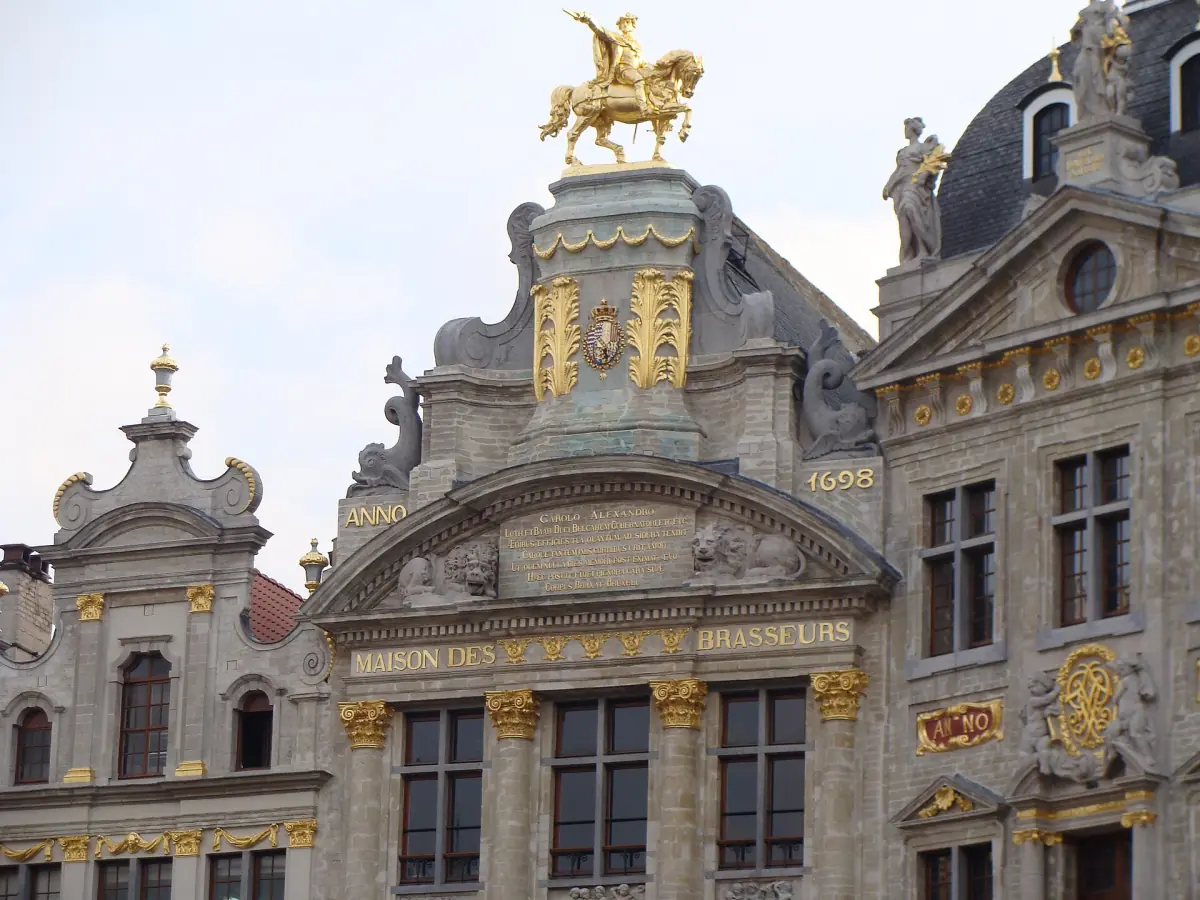
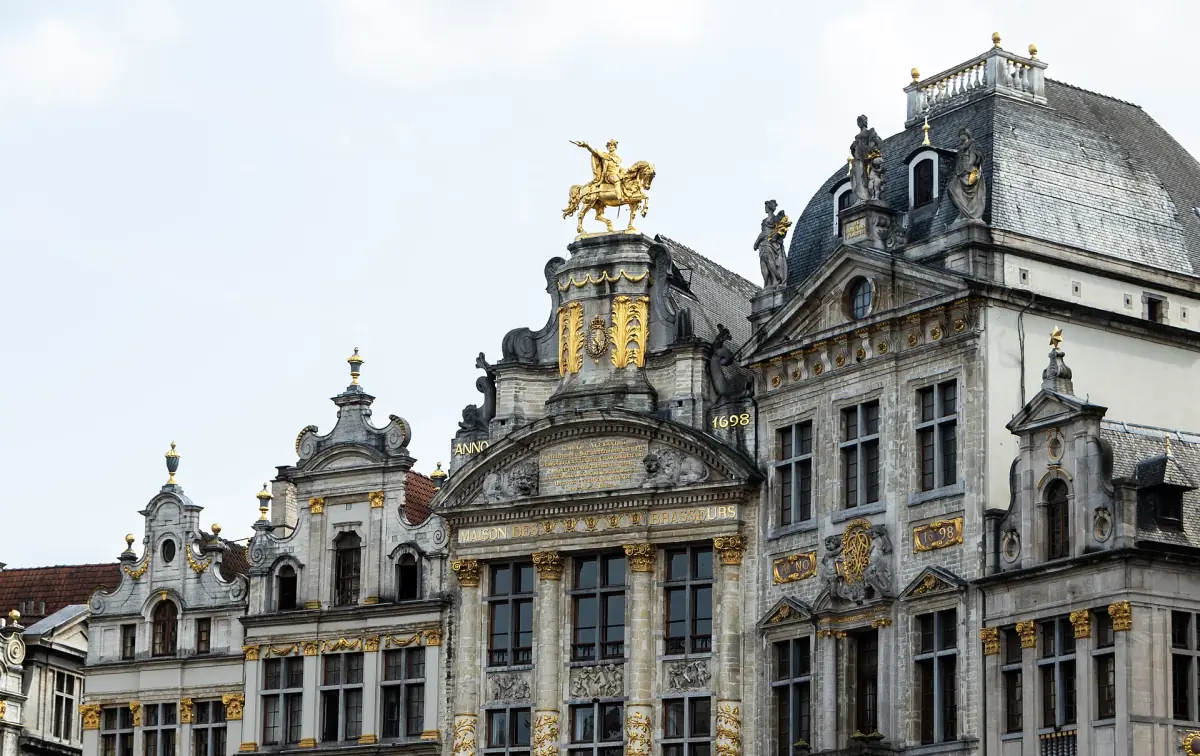
The houses around the square belonged to the guilds, and several names are still in use: Le Roi d'Espagne (the former bakers' house), La Brouette, La Louve, Le Cornet, Le Renard, the Maison des Brasseurs, La Rose and Les Ducs de Brabant. The names do not mean that the interiors are open to the public.
The writer Victor Hugo stayed at the house Le Pigeon, Grand-Place 26/27, in 1852. A plaque on the facade recalls his stay.
The area also has a long relationship with beer and chocolate. Belgian beer culture was added to UNESCO's list of intangible heritage in 2016. That inscription is separate from the World Heritage site of the square. More on the beer page and the chocolate page.
A UNESCO World Heritage site
What the listing covers.
UNESCO inscribed the Grand Place in 1998 under criteria (ii) and (iv). The inscribed area covers 1.48 ha and the buffer zone covers 20.93 ha. The inscribed area is not the same as the paved square, which is about 108 m long and at most 40 m wide.
The buffer zone includes the historic lower town around the square, where parts of the medieval street pattern remain. Not the whole city centre is medieval, and not the whole centre is inscribed.
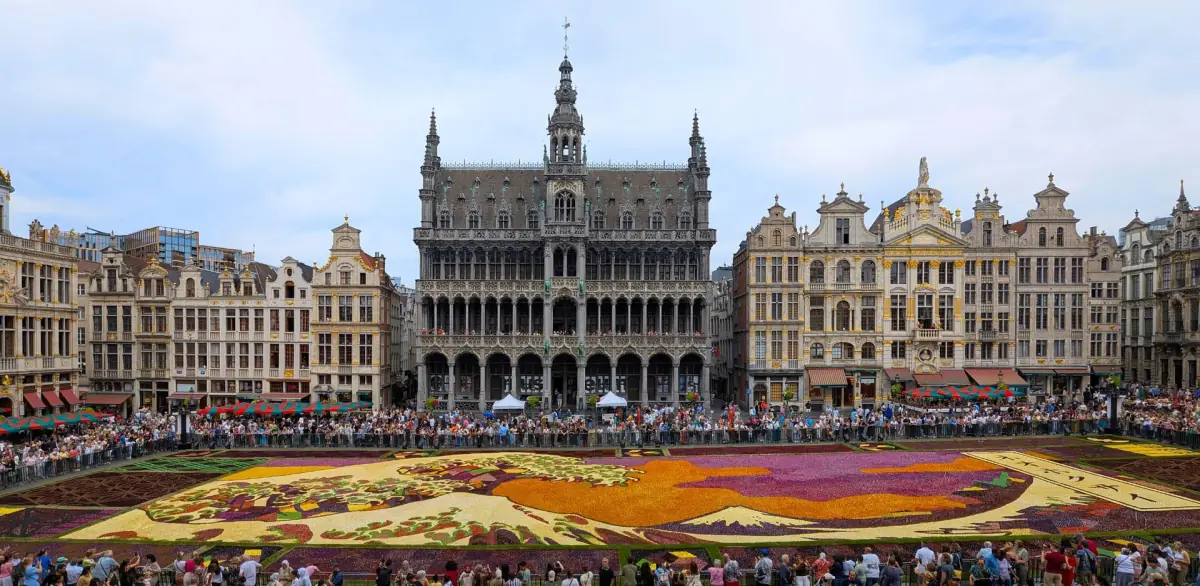
A flower carpet has been laid on the square since 1971, and every two years since 1986 around 15 August. The latest edition ran from 13 to 16 August 2026. Find the full story on the flower carpet page.
Plan the rest of your trip
Where the history shows up today.
Grand Place history: frequently asked questions
When was the Grand Place built?
There is no single year. The oldest references date from the 12th century, and the Town Hall was built in phases between 1402 and 1455. Most houses were rebuilt in stone after the bombardment of August 1695.
What happened in 1695?
French troops under Marshal de Villeroy bombarded Brussels in August 1695. They destroyed large parts of the houses on the square, while the Town Hall facade and tower and a few stone walls survived.
Is the Grand Place medieval?
Only in part. The Town Hall is Gothic and dates from the 15th century, but the ensemble comes mostly from the end of the 17th century, and the Maison du Roi is a historicist rebuild.
When did the Grand Place become a World Heritage site?
UNESCO inscribed it in 1998, under criteria (ii) and (iv).
Which writer stayed on the Grand Place?
Victor Hugo stayed at the house Le Pigeon, Grand-Place 26/27, in 1852. A plaque on the facade recalls his stay.